Tamper-Evident Labels & Security Labels: Types, Uses & How They Work
In a global marketplace where supply chains are increasingly complex, product integrity has never been more critical. Whether you are shipping high-value electronics, life-saving pharmaceuticals, or consumer food products, the physical security of your packaging is your first line of defense against counterfeiting, theft, and unauthorized access.
While many businesses search for “tamper-proof labels,” the industry standard is actually “tamper-evident.” This guide explores the critical differences between these terms, the various materials available, and how to choose the right security seals for your specific application.
What Are Tamper-Evident Labels?
A tamper-evident label is a specialized security tool designed to provide clear, irreversible evidence of an attempt to open or alter a product’s packaging. Unlike standard labels, which are designed to remain intact or peel off cleanly, these labels are engineered to fail in a specific, highly visible way.
They serve three primary functions:
- Deterrence: The presence of a visible security seal discourages casual tampering.
- Detection: If a breach occurs, the label provides immediate visual proof to the consumer or quality control team.
- Verification: They often include unique serial numbers or branding to verify product authenticity.
Tamper-Proof Labels vs. Tamper-Evident Labels: What’s the Difference?
In the labeling industry, the term “tamper-proof” is frequently used by buyers, but it is technically a misnomer.
- Tamper-Proof Labels: Theoretically, these would be impossible to remove or bypass. In reality, a determined individual with enough time and the right tools can bypass almost any physical barrier.
- Tamper-Evident Labels: These are the industry standard. They do not claim to “stop” an intruder, but they guarantee that if an intrusion happens, it will be impossible to hide.
By switching the focus to evidence rather than prevention, manufacturers can create a more reliable security protocol that alerts the end-user before a compromised product is used or consumed.
Types of Security Labels & Seals
Selecting the right security label depends on your substrate (the surface the label is applied to) and the environment the product will face.
1. VOID Labels
These are among the most popular security labels. When someone attempts to peel the label back, a “VOID” message (or other pattern) is revealed both on the packaging surface and the label itself. Once triggered, the effect is permanent and cannot be “reset”.
2. Destructible Vinyl
Often used for warranty seals on electronics, destructible labels are made from an extremely fragile film and a very strong adhesive. If someone tries to remove the label, it breaks into tiny, eggshell-like fragments rather than peeling off in one piece.
3. Security Seals
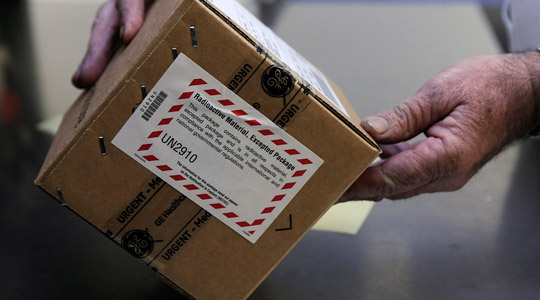
Security seals are often larger and used to secure external shipping cartons or crates. These can be customized with barcodes or QR codes to track the movement of a package through the supply chain.
Security Label Comparison Table
To help you determine which material fits your ROI goals, refer to the table below:
| Label Type | Primary Benefit | Best For… | Tamper Evidence Method |
| VOID Polyester | High durability | Electronics, high-value assets | Permanent “VOID” message left on surface |
| Destructible Vinyl | Impossible to reuse | Warranty seals, small components | Breaks into tiny fragments on contact |
| Tamper-Evident Paper | Cost-effective | Food & Beverage, Pharma | Visible tearing or fiber disruption |
| Security Tape/Seals | Box/Crate security | Logistics & Shipping | Pattern reveal upon opening |
How Void Labels Work
The science behind VOID labels involves a multi-layer construction. The label consists of a face stock, a release coating applied in a specific pattern (like the word “VOID”), and a high-tack adhesive.
When the label is applied, the adhesive bonds to the surface. When it is pulled up, the release coating ensures that only parts of the film remain attached to the surface, creating the “ghosting” effect that reveals the hidden message. These labels are particularly effective on smooth surfaces like metal, plastic, and high-gloss cardboard.
Industries That Require Tamper-Proof Stickers
Security labeling is not just a preference; in many sectors, it is a legal requirement.
- Pharmaceuticals & Medical Devices: To maintain GMP compliance, manufacturers must ensure that patients can trust the integrity of their medication.
- Food & Beverage: Tamper-evident stickers prevent “grazing” in retail environments and ensure that food safety is maintained from the factory to the table.
- Electronics: Warranty protection is a major use case. Destructible “anti-tamper” labels prevent users from opening a device and voiding their service agreement while attempting unauthorized repairs.
Choosing the Right Security Label for Your Product
When sourcing security labels, consider the following three factors:
- Substrate Material: Does the adhesive work on recycled cardboard, powder-coated metal, or low-energy plastics?
- Environmental Conditions: Will the product be exposed to extreme heat, moisture, or chemicals? If so, you may need a durable industrial label with added security features.
- Application Method: Are these being applied by hand or via an automated labeling line? The material must be compatible with your production speed.
Custom Tamper-Evident Labels from Royal Label
Protecting your brand requires more than an off-the-shelf solution. At Royal Label, we specialize in high-performance custom label printing that integrates security features directly into your brand’s aesthetic.
Whether you need printable security labels for a small batch or high-volume VOID seals for a global rollout, our team can help you navigate the technical requirements to find the most effective, ROI-positive solution.
Protect your product integrity with custom-engineered tamper-evident labels. [Get a Quote for Security Labels Today]